A residency you tune to your own career.
Forty-eight months. Six clinical sites. An individualized Career Development Track that begins in PGY-1 and becomes refined by PGY-4. Below is an overview of the curriculum, the progression of training across each year, and the role of simulation, research, and wellness throughout residency.
This four-year Emergency Medicine Residency program is pending Initial Accreditation approval by the Accreditation Council for Graduate Medical Education (ACGME) with anticipated notification of approval end August 2026. This four-year program fulfills the training requirements defined by the American Board of Emergency Medicine (ABEM). Graduates are eligible to take the ABEM Qualifying Exam and subsequent Certification Exam.
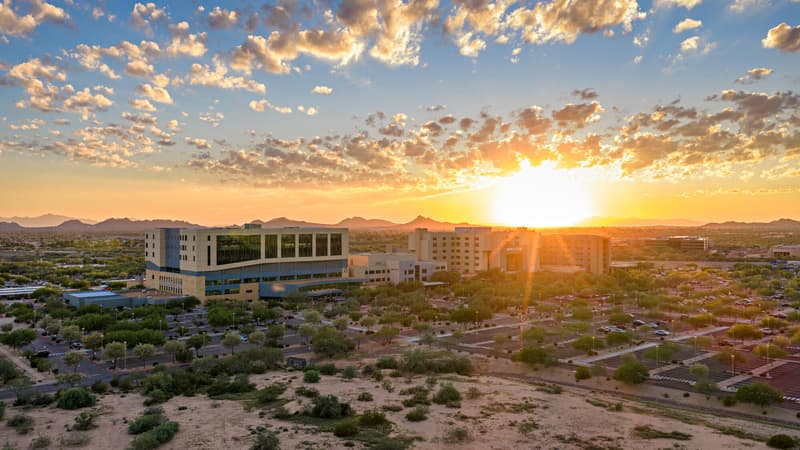
Mayo Clinic in Arizona
Phoenix campus, looking west toward the McDowells.
Four years training, anchored in the Mayo Clinic in Arizona ED and broadened across five partner sites in the Phoenix metro. PGY-1 builds the foundation through critical care, anesthesia, orthopedics, ultrasound, and EMS. PGY-2 adds trauma-SICU at St. Joseph’s, obstetrics and toxicology at Banner University-Phoenix, and stroke neurology at Mayo. PGY-3 and PGY-4 carry team leadership, and expand on clinical care through critical care, admin/QI, sports medicine, and elective rotations.
Residents train at a variety of emergency departments with diverse patient populations and resources, preparing them for any clinical setting upon graduation. In addition to Mayo Clinic in Arizona, EM rotations are hosted at Valleywise Health Medical Center, Phoenix Children’s Hospital (Main and Arrowhead campuses), and HuHuKam Memorial in the Gila River Indian Community. Senior EM selectives bend the program toward your intended practice.
Emergency Medicine Core Conference is held every Wednesday morning, 7 a.m. to 12 p.m., with protected attendance during all EM rotations. Residents receive at least 240 hours of synchronous didactic content per year, structured around the ABEM Emergency Medicine Model — case-based teaching, simulation, journal club, procedural workshops, and board review.
CDTs run longitudinally across all four years. Each track pairs you with a faculty mentor, a scholarly project, and eleven weeks of protected elective time — three weeks in PGY-2, four weeks in PGY-3, and four weeks in PGY-4. Roughly twenty-five percent of CDT elective time is protected for scholarly work.
- Administration
- Critical Care Medicine
- Emergency Medical Services (EMS)
- Global Health
- Integrative Medicine
- Medical Education
- Palliative Care Medicine
- Sports Medicine
- Toxicology / Addiction Medicine
- Ultrasound
Don’t see what you want? Residents can propose and develop new tracks with the program director and a faculty mentor.
Six health systems, forty-mile radius. By graduation, you will have experience across diverse emergency care settings, preparing you for the wide range of environments in which emergency physicians practice.
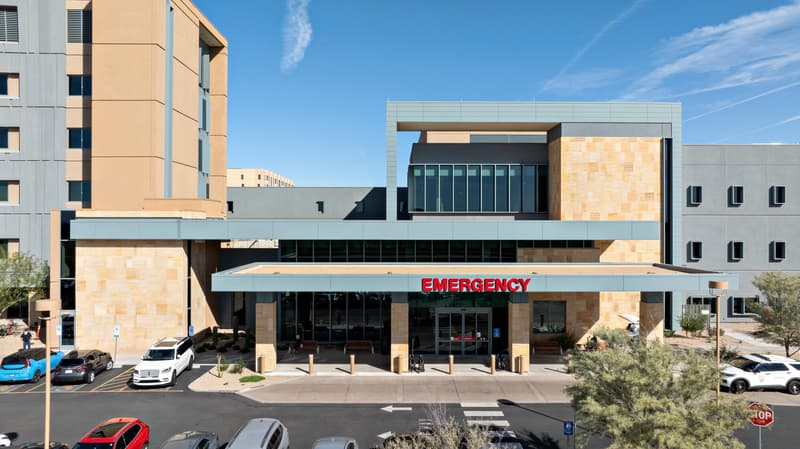
Primary site
Mayo Clinic in Arizona Emergency Department
Primary site
Mayo Clinic in Arizona
Tertiary academic medical center. 62-bed ED with three major resuscitation bays. Comprehensive Stroke Center, STEMI receiving center, LVAD and organ transplant program.
Pediatric emergency medicine
Phoenix Children's Hospital
Level 1 Pediatric Trauma Center. Main campus 68-bed ED, 100,000+ pediatric visits per year. Arrowhead community campus for high-volume pediatrics.
County safety net
Valleywise Health Medical Center
Level 1 trauma center. Arizona's only nationally recognized Burn Center. Maricopa County's safety-net hospital, with its own ACGME-accredited EM residency.
Trauma & neuroemergency
St. Joseph's Hospital and Medical Center
Level 1 trauma center in central Phoenix. Home of Barrow Neurological Institute, world-renowned for neurosciences.
Toxicology & obstetrics
Banner University Medical Center – Phoenix
Tertiary academic teaching hospital and Level 1 trauma center. Renowned medical toxicology center with its own admitting service from observation through ICU. High-volume labor and delivery.
Rural & underserved
HuHuKam Memorial Hospital
Part of Gila River Health Care (GRHC), a tribal-run healthcare network serving the Gila River Indian Community south of the Phoenix metro. Rural, resource-limited emergency care; cultural-sensitivity training and a Gila River EMS ride-along included.
Senior residents have the opportunity to complete additional four-week EM selectives at Mayo Clinic emergency departments in Rochester, MN and Jacksonville, FL; Indian Health Services Rural EM at Winslow Indian Health Care Center / Dilkon in Northern Arizona; and St. Joseph’s Hospital and Medical Center. Three Mayo campuses, six health systems, your residency.
Block schedules with four-week rotations. Conference Wednesday mornings, protected. Four weeks of paid vacation each year. Wellness time is scheduled, not earned.
In the Mayo Clinic ED, 9-hour shifts. 7 hours of taking new patients. 2 hours for wrap-up, disposition, documentation, and dedicated shift debrief and feedback with faculty.
Program-paid attendance and presentation at national conferences:
PGY-1 to PGY-4
Presenter-supported travel
Mayo funds travel and lodging for any resident accepted to present at a regional, national, or international conference (SAEM, AAEM, ACEP, CORD, AzCEP)
Rising Chief PGY-3
CORD
Council of Residency Directors Academic Assembly
PGY-4
ACEP
ACEP Scientific Assembly
Reps, when you need them.
Emergency medicine is procedural, time-pressured, and unforgiving of hesitation. The Mayo Clinic in Arizona Simulation Center is designed to remove the gap between learning a skill and using one.
High-fidelity adult and pediatric mannequins. A dedicated ultrasound bay. Task trainers for ultrasound-guided vascular access, lumbar puncture, central lines, and airway management including video laryngoscopy and surgical airway. Cadaver labs for advanced procedural training and anatomy review. Interdisciplinary scenarios with nursing, pharmacy, trauma surgery, and other teams.
In-situ simulation runs inside the emergency department itself, in the same bays where you treat patients. Just-in-time training is available on shift: when a procedure walks through the door, the equipment and the teaching are minutes away. Live ultrasound education is built into the workflow, with QR-code access in every doctor workarea to image libraries and teaching modules you can pull up between patients.
A program with the infrastructure for real questions.
Mayo Clinic’s research culture is one of the things its name is built on. That culture extends to residents here, with intentional support: dedicated project funding for residents, supportive IRB processes, and faculty who actively co-author with trainees.
Residents have direct access to institutional data warehouses and electronic health record datasets, support from quantitative health sciences (statisticians and data analysts), and collaboration with the Mayo Clinic Kern Center for the Science of Health Care Delivery. The work covers the breadth of emergency medicine — case reports and image series, quality improvement and operations research, prospective original studies, multicenter collaborations, and funded investigations.
Each resident completes and disseminates a scholarly project — a peer-reviewed publication, a national or international presentation or workshop, a book chapter, a published QI project — with twenty-five percent of CDT elective time protected for the work. Whatever question you bring with you, there is a mentor, a budget, and a path to publication.
A four-year program shouldn’t take four years off your life.
Wellness here is not a wellness committee. It is the schedule, the staffing, the culture, and the people.
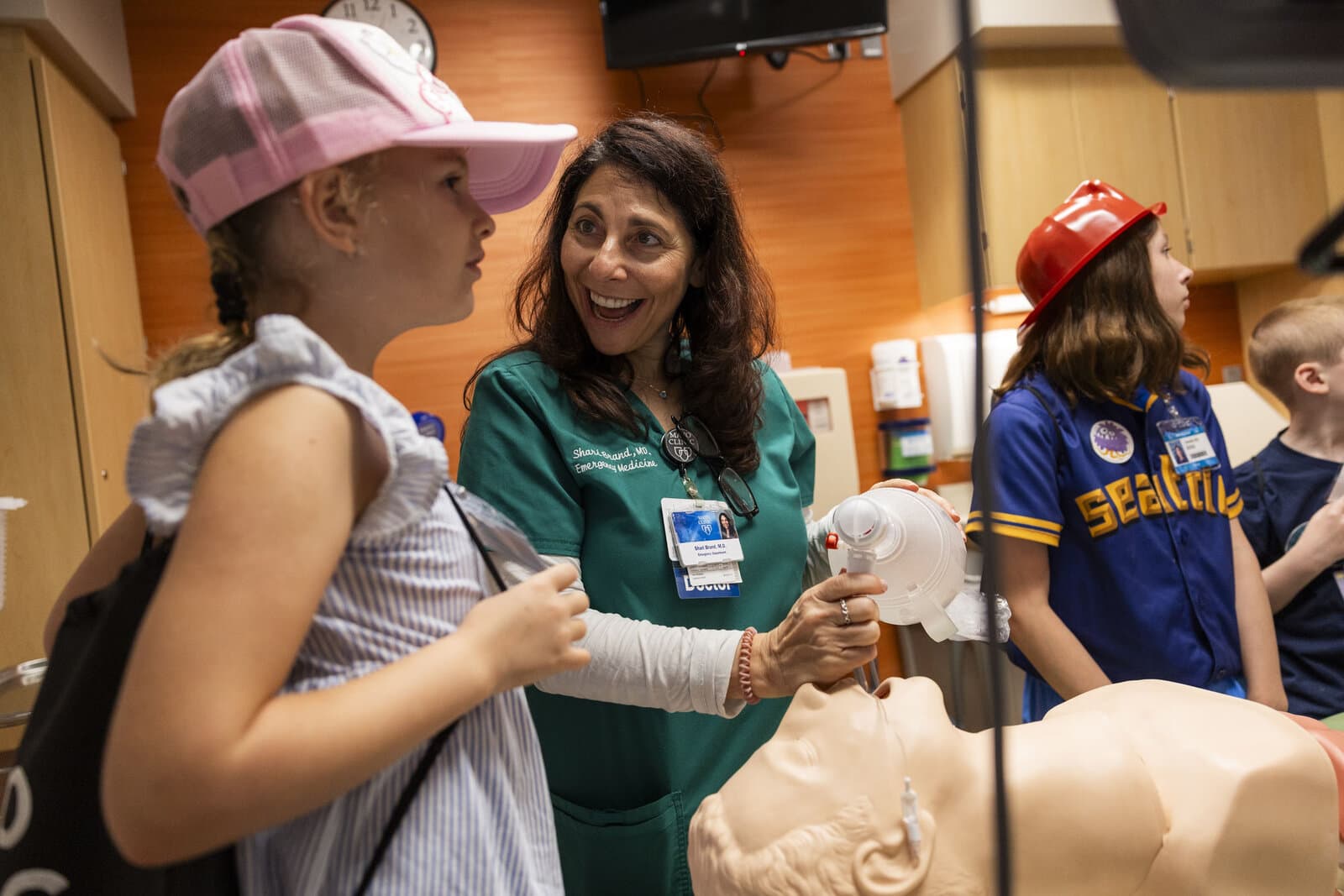
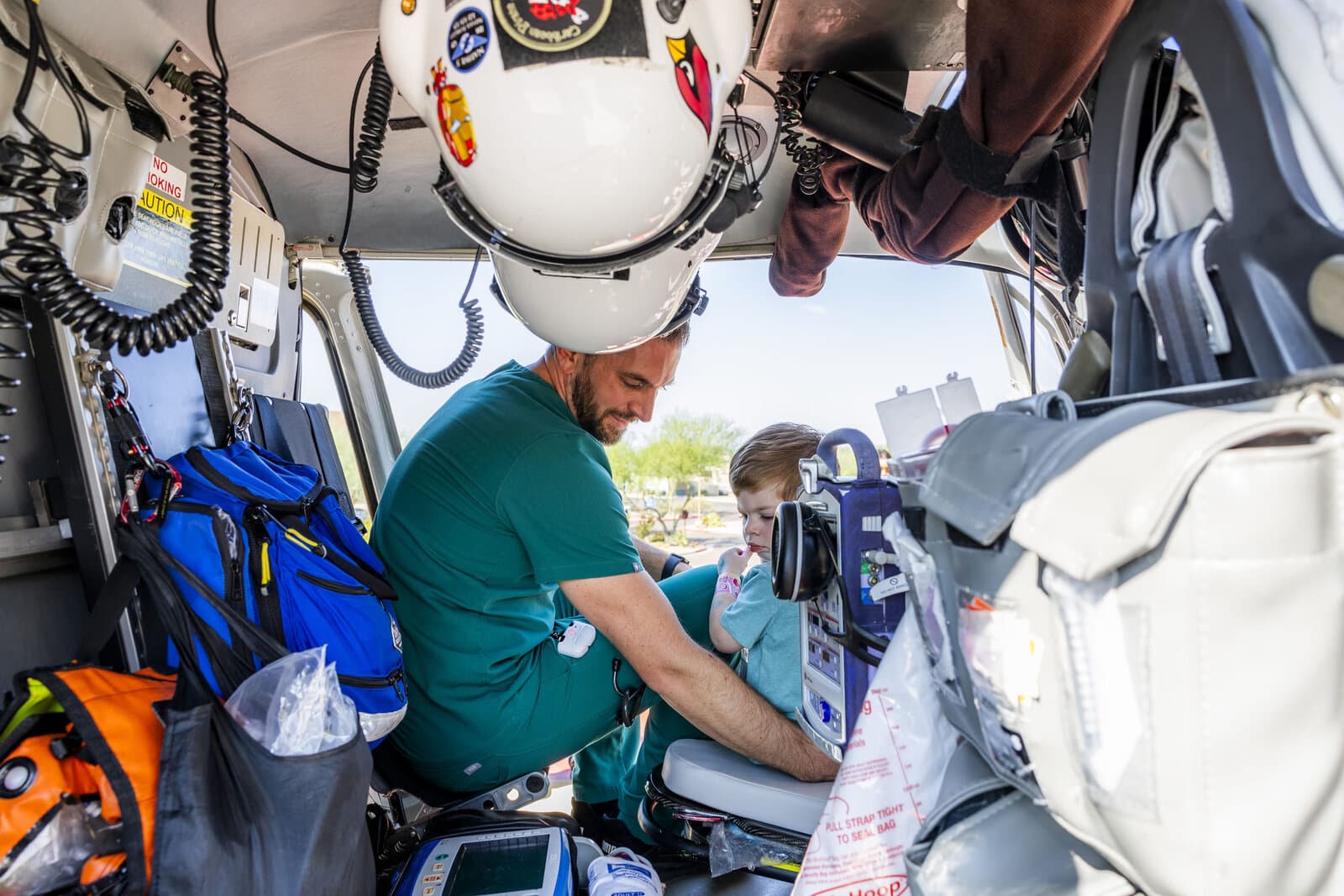
Every resident is integrated into our mentorship program that continues across all four years. The mentorship arc moves through orientation, skill building, leadership development, and ultimately launch and legacy — anchored in the program’s belief that career fulfillment and personal well-being are inseparable. Family is part of the program: partners and children are invited to milestones, included in communications, and welcomed into the cohort. Once a year, the Emergency Medicine and Critical Care services open the ED for a family day — spouses run simulated procedures, kids see the workplace their parent disappears into for shifts, and the people who support you get to see what they’ve been supporting.
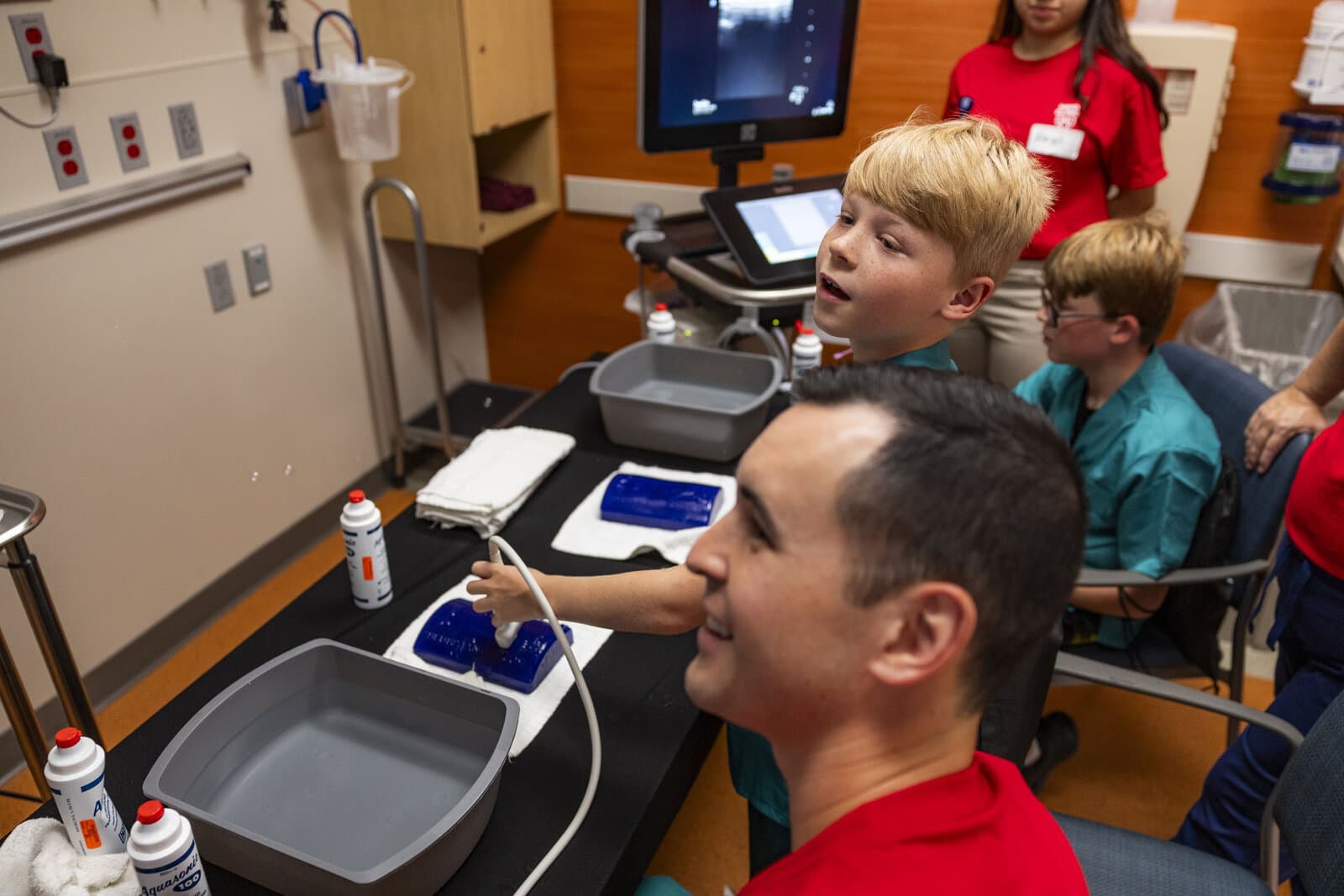
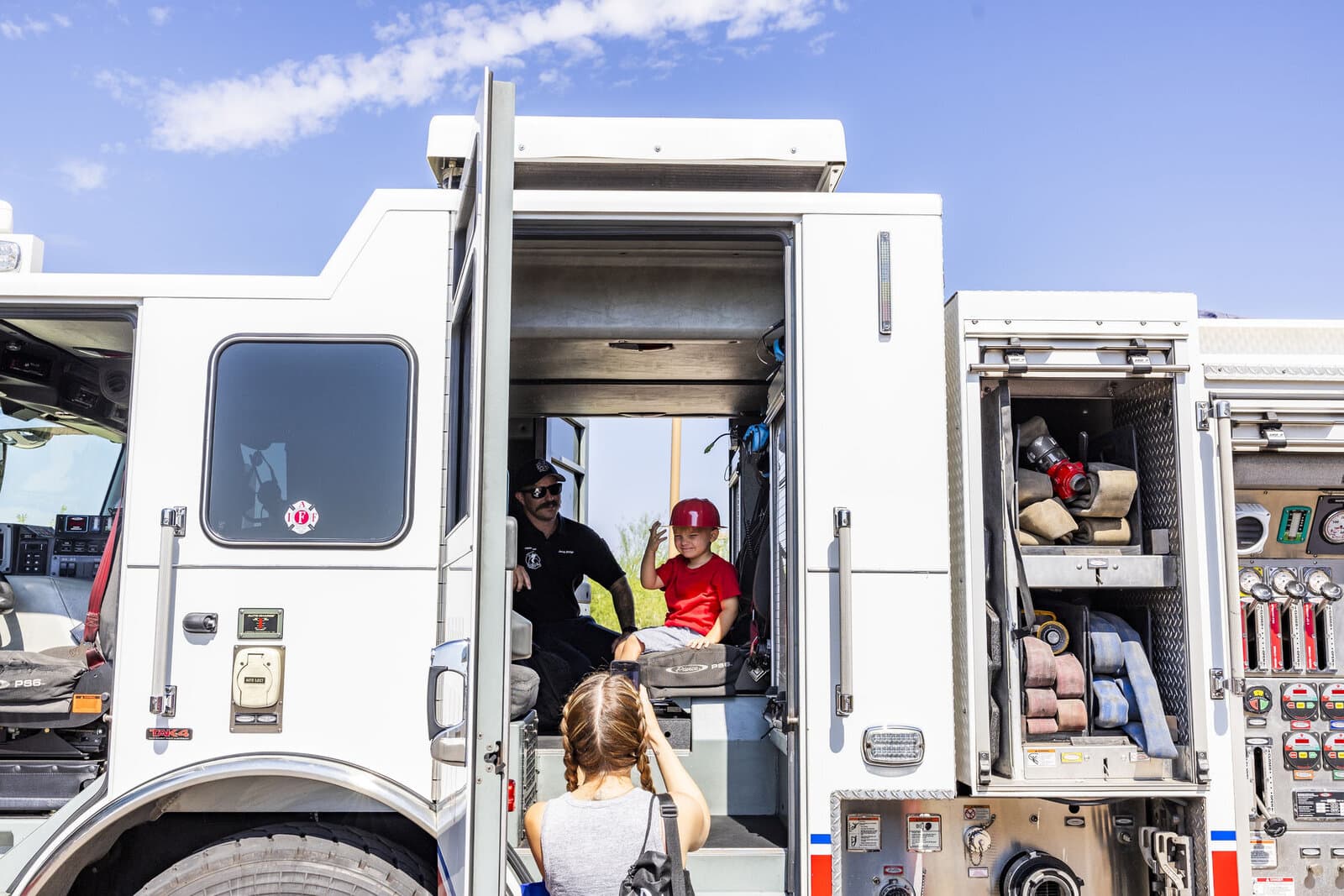
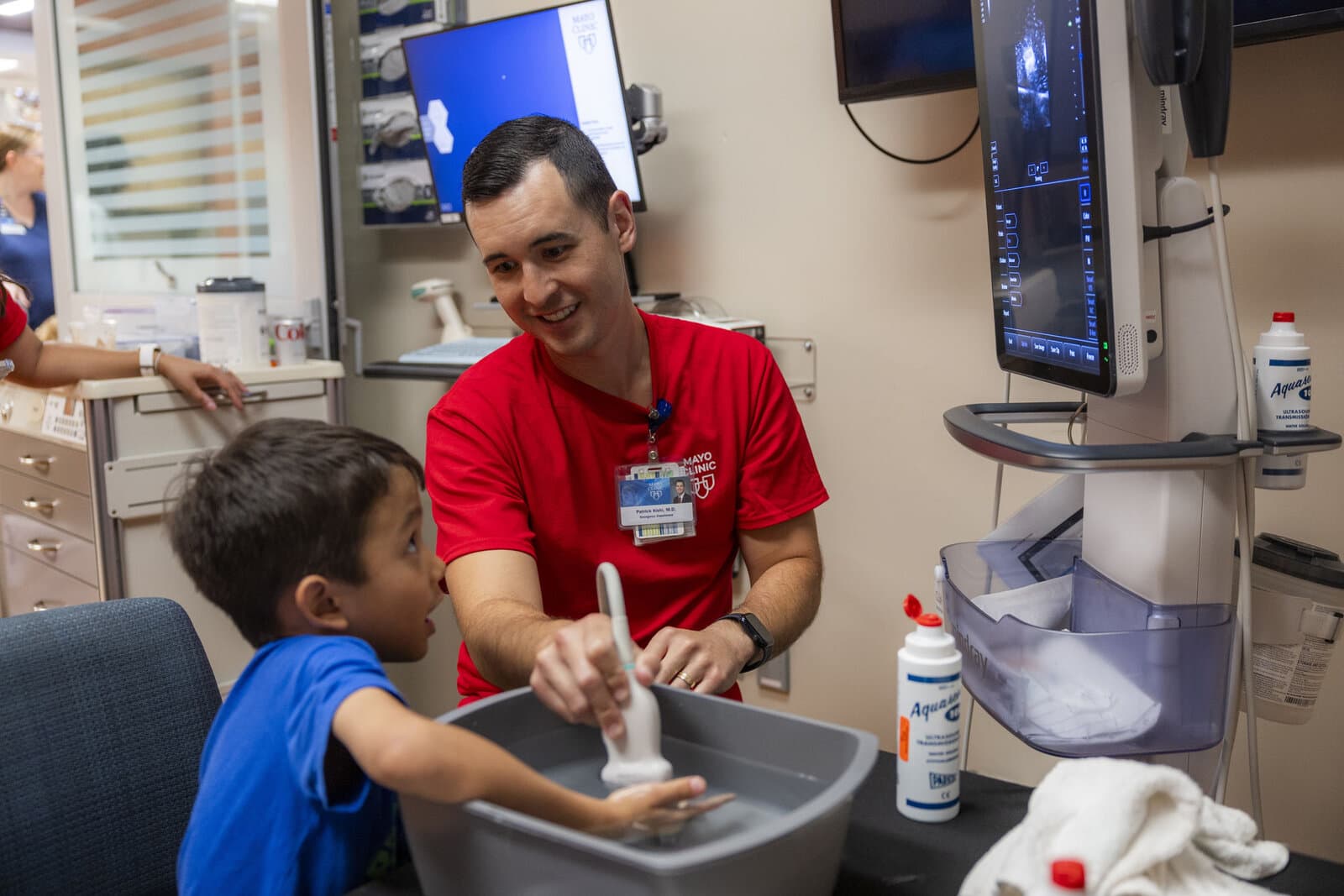
The staff supports you. The schedule respects you. Four weeks of paid vacation a year, an annual resident retreat, and a 24/7 resident lounge. The program intends for you to leave residency more whole than you arrived.